Why We Get Stuck: Innovation, the DMN, and Cognitive Flexibility
Let’s start with the elephant in the room:
Trauma isn’t rare. It’s not the exception. It’s part of the human experience.
Peter Levine calls it a fact of life.
A large percentage of people will experience at least one traumatic event in their lifetime. That’s a lot of people walking around with a fracture in their narrative. And here’s the real issue:
The mind is a meaning-making machine.
It stacks stories on top of stories in an endless loop, always running in the background. Day and night, it asks the same question:
“What does this mean?”
Which expands to: “What do I, this, that, and all of this in relation mean?”
It becomes a trance.
You don’t even realize you’re hypnotized by your own narrative.
Identifying A Core Wound
When I was three years old, I was physically tortured by my step-monster.
She beat me, pulled out my hair, and locked me in a basement—for an extended period. I was pre-verbal. I had no language for how I felt.
My parents did what they were told was best: “Don’t talk about it.”
And so… silence became the container.
I was left with a body-based frame of experience I couldn’t process, couldn’t verbalize, and couldn’t escape. That frame loaded itself into the architecture of my mind.
Fast forward 30 years.
I’m now an adult man—still carrying the pattern.
But it doesn’t show up like it did when I was three.
The same unresolved structure now manifests as feeling trapped in my own mind.
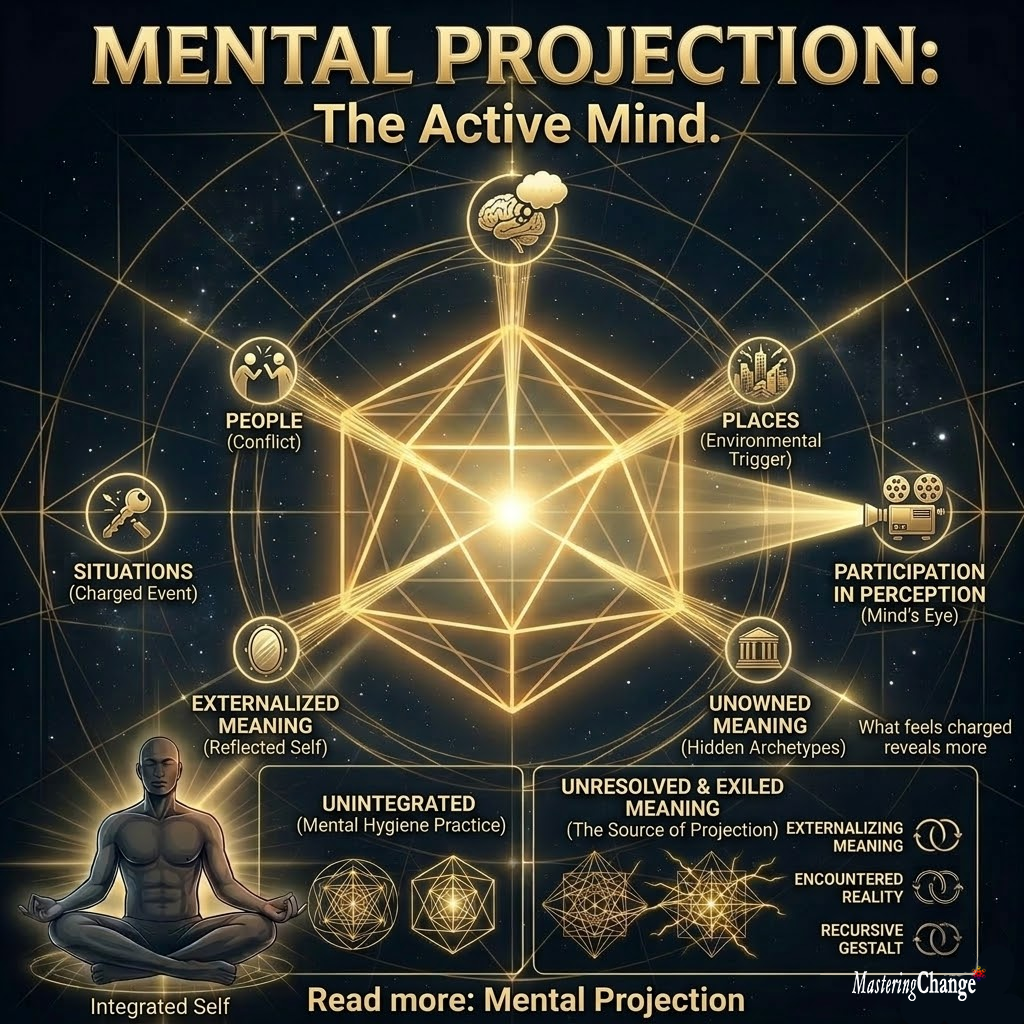
The mind externally projects the structure of the trap in an attempt to both avoid and solve the internal stuckness. These become the loops we orient inside as we navigate our 3D world.
This is the invisible insanity at the root of much of your suffering.
And it’s woven into the story of society at large.
Because how do you fix something you don’t even know is broken?
What happens when you attempt to fix something, that isn't even broken?
(Read about mental projections.)
Your Brain Is Running a Simulation
Over a long arc of evolution, your meaning-making systems have been shaped around one primary goal: survival.
We are vulnerable to cognitive biases—including attack thoughts, catastrophizing, negativity bias, and confirmation bias—all of which feed us simulated worst-case scenarios.
Your brain is constantly playing out:
- What could happen.
- What might happen.
- What has happened.
- What is happening.
This evolutionary simulation system keeps you alive—yes.
But it also traps you if you don’t know how to maintain the software.
If you don’t do the work, your mind becomes the maze you live in.
You get trapped in simulations.
You lose sight of reality.
Enter the DMN (Default Mode Network)
It’s not just trauma that creates distortion.
All day long, the mind builds and rehearses patterns of meaning through repeated, internally directed processing associated with what neuroscientists call the Default Mode Network (DMN). This network is most associated with self-reflection, autobiographical memory, mind-wandering, and imagining what comes next.
The DMN is adaptive. It allows for higher-order thought by organizing familiar patterns into usable shorthand:
Beliefs.
Feelings.
Reactions.
Meaning clusters.
Think of it like a zip file. Not as literal storage, but as a way the mind condenses familiar patterns into shorthand, freeing up conscious attention to engage what feels new or immediate.
But over time, those files pile up.
They get outdated.
They distort the lens.
They become what I call your looking glass.
And if that glass is saturated with meaning that no longer serves your life—your decisions, relationships, and visions become murky at best… destructive at worst.
Cognitive Flexibility: Why You Feel Trapped
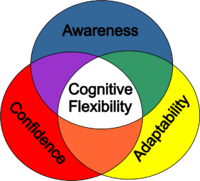
Cognitive flexibility—also called cognitive shifting—is your brain’s ability to adapt to new, changing, or unexpected events. It’s what allows you to:
- Pivot between tasks.
- Reframe challenges.
- Integrate new insights.
It’s essential to being functional in a fast-changing world.
But here’s the problem:
We’re not training this skill.
This isn’t just a trauma issue.
It’s a velocity of change issue.
The world is moving so fast that most people are stuck in perpetual reaction mode, just trying to keep up.
What used to happen every 100 years now happens in 10.
What used to happen every 10 years now happens every year.
That speed demands more time facing outward and less time tuning inward.
And what’s left unattended inside begins to calcify.
You need to do the inner excavation necessary to spot the obsolete assumptions still running your system. Because what is adaptive can become limiting when old inner maps keep running without reflection or updating.
Shadow Work = Mental Hygiene
Shadow work isn’t just for those with trauma.
It’s mental hygiene. (Read more about mental hygiene)
You wouldn’t drive a car with mud caked on the windshield.
You certainly wouldn’t hop on the freeway at 75 mph.
And yet—day after day—you navigate your life using a flawed, outdated, and often trauma-loaded looking glass.
I’ve worked with people from every walk of life.
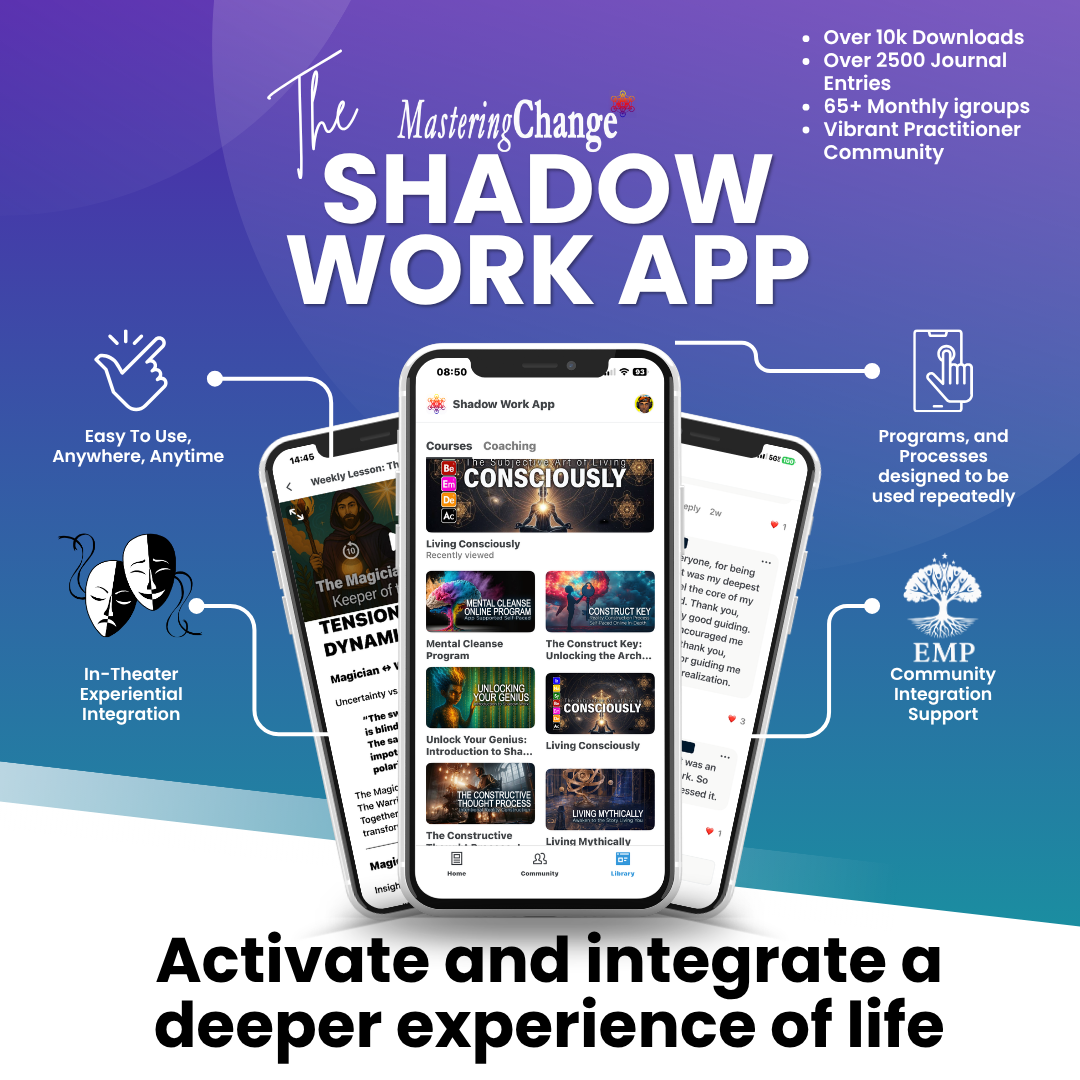
Shadow work is the first step to any real transformation. (Read What is Shadow Work? Articie)
It’s foundational to innovation, strategy, and sustainable success.
Because no matter how great your vision is—you can’t reach it if your mind is projecting distortions that block the path forward.
Start clearing your looking glass.
Start reclaiming your cognitive freedom.
It’s time to stop reacting and start creating.
Shadow work gives you the tools to take back the authorship of your mind.
Want support? We’re here.
Let’s clean the lens.