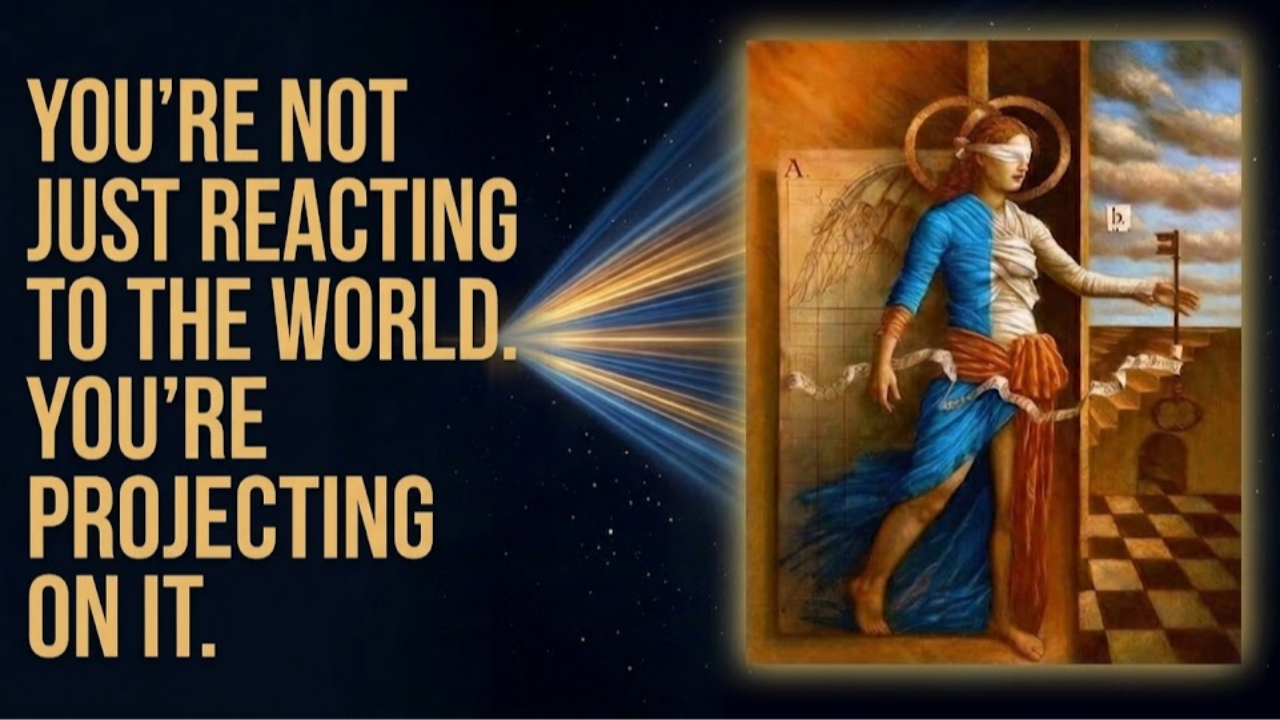
You're Not Just Reacting to the World. You're Projecting on It.
The meaning patterns behind our collective chaos, and what becomes possible when we develop the hygiene to recalibrate them
Why the World's Turmoil Might Begin Where You Least Expect
Something peculiar happens when consciousness encounters the world. We do not simply receive what is happening around us. We interpret it. We organize it. We give it meaning.
Someone becomes quiet, and we experience rejection. Someone disagrees with us, and we experience disrespect. A change happens at work, and we experience threat. Something occurs, but what we experience is never only what occurred. Somewhere between the event and our response, we make meaning.
This is one of the central insights behind enactive cognition, developed through the work of Francisco Varela, Evan Thompson, and others. Cognition is not simply the passive reception of an already completed world. We experience reality through an ongoing relationship between organism and environment.
That distinction matters.
Because if our experience of the world is participatory, then some portion of what we believe we are reacting to is based on the meaning we have brought with us.
The Meaning We Cannot See
Every belief we hold, every narrative we inhabit, every emotional posture we carry into a conversation, a conflict, or a Tuesday morning influences how we organize what happens next.
Most of the time, we do not notice.
Meaning forms so quickly that the interpretation and the event can seem like the same thing.
They ignored me.
They betrayed me.
They don't respect me.
I'm not safe here.
But those statements are not simply descriptions of events. They already contain meaning.
This is where projection becomes important.
Projection is often described as seeing in another person something we refuse to recognize in ourselves. That happens, but it is only one expression of a much larger process. We project meaning. We carry unresolved, resisted, or already-established meaning into an encounter, and then experience some of that meaning as though it belongs entirely to what is outside us.
We see threat where there may be difference. We experience abandonment inside distance. We discover disrespect inside disagreement. We live inside a story we did not consciously author, and for a moment, or sometimes for decades, we mistake the story for reality.
This is not a deficiency. It is part of being a meaning-making human being.
We do not approach every new experience empty. We meet what is happening now through meaning already made. Through identity. Story. Belief. Emotion. Decisions we have made about ourselves, other people, and the world around us.
Some of that meaning is useful. Some of it is brilliant. Some of it helped us survive.
Some of it is old.
And some of it has never been examined.
The World as Mirror
Now consider what happens when millions of meaning-making people carry unresolved material into relationships, organizations, communities and public life.
Political polarization begins to contain more than policy differences. Each side can become a screen for the fears, judgments and meanings carried by the other. Social media does not merely transmit information. It gives us an almost endless supply of material to place, reinforce, and defend meaning.
This does not mean every problem is projection.
Real injustice exists. Real economic hardship exists. People betray one another. Systems fail. People behave badly. Circumstances matter.
Turning within does not require us to deny what is actually happening.
It asks something more difficult.
What happened, and what did I make it mean?
That distinction creates room for investigation.
Because the intensity of our reaction can contain something beyond the circumstances themselves, there can be a smattering of mattering that we add that does not belong entirely to the situation in front of us. Old meaning can enter a new experience and quietly become part of what we believe we are seeing.
We are meaning-imbuing and meaning-navigating beings.
And when we do not know that we are doing it, we can spend enormous amounts of our lives fighting with meanings we believe exist only outside us.
Failing to address the meaning we orient from is a key marker of immaturity at the collective level.
What Mental Hygiene Actually Means
The phrase mental hygiene can sound clinical, perhaps even quaint. But it names something essential: the deliberate practice of turning awareness toward the meaning structures shaping our experience.
This is not positive thinking. It is not trying to place a better story over unexamined pain. It is not pretending circumstances do not matter. Quite the contrary. It's becoming more aware of the unconscious meaning being projected.
It is learning to notice our participation in the experience we are having.
What happened?
What did I feel?
What judgment did I make?
What did it mean to me?
What part of that meaning belongs to what is happening now, and what part of it might have arrived with me?
Without that kind of practice, a meaning-making being can keep projecting unresolved material into relationships, decisions, and interpretations of reality without knowing it. Without conscious engagement, we mistake the projection for confirmation. This miscalculation underpins the cycles that trap us.
Depth work gives us a way to investigate at that level. Not as a replacement for therapy, though therapy may overlap with it, but as a deliberate engagement with the deeper structures of thought and meaning through which we experience being alive.
When someone intentionally develops at depth, the result does not have to look dramatic from the outside. Sometimes it is dramatic. Sometimes it is a subtle but meaningful shift in how a person meets an experience they have encountered a thousand times before.
The experience may not have changed.
The meaning has.
And because the meaning has changed, something different becomes possible.
Simone Biles and the Line That Changed Everything
At the Tokyo Olympics in 2021, Simone Biles withdrew from several events after experiencing what gymnasts call the "twisties," a dangerous loss of spatial awareness while performing skills in the air.
The response was complicated. Some praised her. Others called it weakness. Much of the conversation immediately became about what her decision meant to everyone watching.
But beneath the public debate, a human being recognized something inside her own experience that the expectations around her could not recognize for her.
She stopped.
She listened.
She chose not to surrender authority over her internal experience simply because the world had already decided what someone in her position was supposed to do.
She later returned to competition, and ultimately to the Olympic stage in Paris in 2024, where she again performed at the sport's highest level. Her return did not erase Tokyo. It made Tokyo part of a much larger story.
That is what recalibration can look like in motion.
Not hiding from difficulty. Not pretending the difficult experience never happened. Not forcing ourselves to remain loyal to meaning simply because it once organized our lives.
We can encounter what is there, investigate it, and respond differently.
The Invitation
We are meaning-making beings living in a world saturated with story.
The patterns carried in the deep consciousness do not disappear simply because circumstances change. Meaning already made continues to influence what we notice, resist, fear, pursue, and project onto the people and situations around us.
The invitation is not to transcend being human.
It is to become more conscious of how we are participating in being human.
To develop the hygiene of turning awareness toward the structures shaping what we see and how we respond. Not only when something breaks. Not only when suffering becomes unbearable. Not as a single insight that gives us an interesting story to tell afterward.
As maintenance.
We tend to our bodies because we understand that being alive requires care. We clean our homes because accumulation is inevitable. We maintain machines because sophisticated systems require maintenance.
Why would the meaning-making system through which we navigate every relationship, decision, and experience of our lives require anything less?
The noise in the world is real.
But so is the meaning we bring to it.
Learning to distinguish between the two may be one of the most important forms of mental hygiene available to us.
Where to Begin
If something in this article named a pattern you recognize in your own life, begin with curiosity.
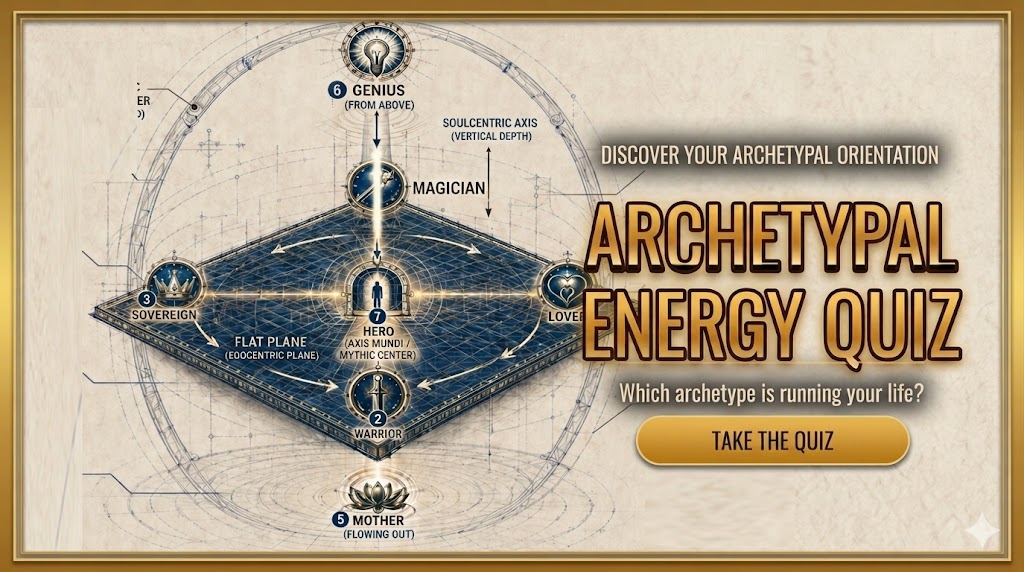
The Archetypal Assessment briefly explores the meaning patterns most active in your experience right now. It takes only a few minutes, but it may show you how you are organizing your experience in ways that have been difficult to see from inside it.
If you already know this work is calling you and want to understand the larger architecture of how meaning structures shape human experience, explore the Practitioner Path. This is where the philosophy becomes practice, and where lived experience becomes the path.