Ditch Your Resolution and Try Out a Living Inquiry
Instead of Setting a New Year Resolution, Try a Living Inquiry
Every January, nearly half of adults set New Year’s resolutions.
By February, most are already abandoned.
By the end of the year, fewer than 10% remain.
This isn’t because people lack discipline.
Research consistently shows that temporal landmarks like the New Year do create real psychological leverage. They reset attention, increase motivation, and make change feel possible. The moment works.
What fails is how we use it.
New Year’s resolutions try to change behavior inside the same mental orientation that created the behavior in the first place. The survival-trained mind agrees for a moment, then quietly reasserts itself.
A Living Inquiry uses the temporal power of the New Year differently.
Instead of asking, “What will I do differently?”
it asks, “From where will I live this year?”
One approach burns willpower.
The other retrains perception.
Same moment.
Different leverage.
That difference is everything.
How Living Inquiry Reclaims Agency at Depth
Most people don’t realize this, but the mind is not programmed to tell the truth.
It is programmed to survive.
The human mind evolved to keep us alive by predicting danger, reducing uncertainty, and reacting quickly. To do that, it constantly asks questions like:
- What’s about to happen?
• What does this mean about me?
• How do I protect myself?
• What should I avoid or control?
These questions run automatically, beneath awareness. They shape perception before we ever think consciously.
This system is useful.
It is also the primary reason people suffer.
Living Inquiry is a way of taking conscious control of this system. Bringing awareness to the forms of thought that have been left untended that show up in the day to day. This is a cornerstone of the Turning Within Practice.
The Core Problem (Stated Simply)
The mind is always orienting.
It is always asking questions. (inquiring)
It is always interpreting meaning.
“In thinking you cast thoughts beyond themselves, surrendering them to that which they can not be.” -James Carse
It is always deciding what matters.
Most of this happens automatically and unconsciously. Our programing orients toward survival by default.
That is how you have been programmed to orient. It conserves energy and orients towards continuation. The mind’s primary directive hijacked to be survival-rooted in it’s orientation.
Living Inquiry does not try to stop this process. It redirects it. It leverages the advanced system of thought you orient and navigate from and begins to recalibrate and update your source code.
What Living Inquiry Is (Plain Definition)
Living Inquiry is the deliberate practice of choosing the question or perspective that orients your awareness, instead of letting survival choose it for you.
That’s it.
It is not meditation.
It is not affirmations.
It is not positive thinking.
It is not belief.
It is strategic contemplation: Contemplating from a specific orientation instead of our programmed, automated perspective.
You are consciously deciding:
“This is the way I will orient my attention and meaning over time.”
New to this? A Living Inquiry is a prompt carried over time. If the idea of placing a question in the mind on purpose is new, start with what a shadow work prompt actually is, then return here. A prompt orients a moment. An inquiry, carried, orients a season.
Why This Works (How the Mind Actually Functions)
The mind is a pattern-recognition system.
Whatever it is oriented toward, it looks for:
• evidence
• confirmation
• meaning
• relevance
If the mind is oriented toward danger, it finds danger.
If it is oriented toward failure, it finds failure.
If it is oriented toward threat, it experiences threat.
Living Inquiry uses this exact mechanism — but intentionally.
Instead of unconsciously asking survival questions, you consciously choose an inquiry that cannot be answered by survival logic.
This forces the mind to reorganize. It moves you through moments of struggle rooted orientation to cultivate a wider stance toward life.
The Living Inquiry Guidelines
Living Inquiry follows a few simple guidelines. If these are followed, your inquiry opens up and begins to recalibrate your system in the subjective experience, tapering your life from the inside out.
- Guideline 1: An inquiry is not meant to be answered
If you are trying to solve it, you are back in survival mode.
The inquiry is meant to orient, not conclude.
To expand and evolve, not complete.
Completion is the myth we all struggle with. Thinking that somehow we are supposed to figure something out. It has stoked a multi-billion dollar industries designed to overcome the human experience. This isn’t about overcoming, this is about conscious embodiment and expansion. Pick an inquiry that brings you into orientation to the higher level identities and relationships. Through orienting at the higher level, problems desolve.
- Guideline 2: You must return to it repeatedly in daily life
This is not a thinking exercise.
It is a living one.
The inquiry only works if it is brought into:
• conversations
• conflict
• work
• relationships
• decision-making
Whenever the thought arises, stop and load the inquiry, ponder it… then return to it again whenever you have a moment. Leveraging the inquiry over and over creates a groove that reinforces and expands the idea. Our 10-second sound bite society is moving too fast. Learning to think at depth has dramatic implications. Choose an orientation, meaning or insight worthy of cultivating a position from requires consistent and persistent orientation.
- Guideline 3: The inquiry must interrupt survival thinking
A good inquiry doesn’t solve, control, or fix. Those are byproducts. But they are not the aim.
Examples:
• What does living in this moment teach me?
• What about this moment is meaningful?
• Where is grace in this moment?
Survival rooted programming is automatically leveraged, the mind incorrectly catalogs the moment as confirmation not translation. The key here is to hold onto a Living Inquiry, ESPECIALLY when it’s difficult. Let the evolved teaching come through you. Spiritual leg day is spiritual leg day.
- Guideline 4: You observe the impact, not the outcome
Living Inquiry is measured by:
• how your nervous system responds
• how present you are
• how quickly you recover
• how much story drops away
Not by answers.
We are not programmed to address how we show up. In fact, we are programmed and conditioned that thinking fast is the only way to think. We are not taught to leverage contemplation effectively. We are not programmed to think at depth. But we do. Just because we aren’t aware of our automation doesn’t make it not true, just invisible and unchangeable.

The Process (Step by Step)
Here is the actual process, stripped down:
- Step 1: Choose one inquiry for an extended period. Not ten. Not rotating daily. One.
“I fear not the man who knows 10,000 kicks, I fear the man who has done one kick, 10,000 times.”
-Bruce Lee
Examples:
• What if this moment is happening for me and through me, not to me and at me?
• What does love say?
• What if the person in front of me is a divine messenger?
Choosing one inquiry and holding it over a period of time takes a practitioner past the surface answer and begins to uncover the deeper wisdom flowing below the surface. Insights are found at depth not at the programmed interpretations we have been unconsciously conditioned to orient from. Holding onto one continues to drill deeper insights from the same hole.
- Step 2: Carry it loosely
You do not need to tell anyone.
You do not need to explain it.
You do not need regiment.
This isn’t about forcing but growing.
You simply remember it when life happens. Let it sit in your mind, let your own genius know how to carry, evolve and direct it. This exercise isn’t one of appearance but depth. It’s not a question of will power but a question of willingness. A willingness to let go of what you have been programmed to orient from to expand and evolve your position.
- Step 3: Apply it at the moment of activation
When you feel:
• tension
• defensiveness
• urgency
• story
• contraction
You return to the inquiry.
Not to think.
To re-orient.
These are the moments that are vital. Moments calling you to leverage survival-rooted insight and not operate through your Living Inquiry. These are moments that define. Give yourself permission to step into a wider stance of what’s possible.
- Step 4: Let the mind recalibrate
Do nothing else.
No fixing.
No analysis.
No forcing.
The mind will reorganize on its own when orientation changes. As your understanding of the inquiry evolves, follow it. A Living Inquiry isn’t a stagnant idea that you demand you become. It is an understanding that you come to with compassion. You follow it while it teaches, informes and recalibrates you. It will evolve and deepen over time, follow it and let it mature your understanding of who you are.

What Changes in the Mind Over Time
If practiced correctly, Living Inquiry produces predictable changes:
- Survival narration quiets
The mind tells fewer urgent stories. - Presence increases
Attention stays with what is happening instead of racing ahead. - Suffering decreases
Not because life is easier — but because resistance drops. - Contact improves
You hear people better.
You see more clearly.
You interfere less.
This is mechanical, not mystical. But there are deeper impacts that those changes emanate from. You cultivate a presence that these symptoms are experienced.

Why Mystics Used This (Without Calling It This)
Every contemplative tradition discovered this mechanism independently.
Not because it was taught —
but because it is how the mind works.
- Christian contemplatives withdrew attention from the survival self (Keating’s “false self system”)
• Zen koans exhausted survival logic until presence emerged
• Sufi inquiry redirected attention from control to love
• Mystics used silence, prayer, and remembrance to interrupt survival orientation
They weren’t doing something magical.
They were retraining orientation.
Living Inquiry is simply naming and reclaiming that function.
What I Learned by Running This Over Time
When I began this practice, I thought I was choosing meaningful inquiries.
What I was actually doing was retraining a survival engine.
I learned:
• suffering is often a posture, not a requirement
• presence and survival cannot run simultaneously
• projection becomes visible when orientation shifts
• I cannot truly hear another person while my story is running
Most importantly, I learned this:
Holding space is not a skill.
It is what remains when survival orientation loosens.
When I let go of my internal narrative while staying present:
• people soften
• they feel seen
• they find themselves faster
Not because I helped them;
but because I stopped interfering.
Why This Is a Game Changer
Living Inquiry is not about becoming better.
It is about reclaiming authority over a mental process that was never meant to run unattended.
The mind learned how to survive.
We never learned how to guide it.
Living Inquiry reclaims that.
The Invitation: Choose an Inquiry Worth Living With
If you take one thing from this, let it be this:
Living Inquiry only works when the inquiry is worthy of time.
Not clever.
Not impressive.
Worthy.
This is not a question you answer.
It is a lens you cultivate.
A way of orienting your mind again and again until it begins to see differently.
Choose One Inquiry for the Year
Set aside a few quiet minutes and ask yourself:
- What question keeps returning in my life?
• Where do I feel most reactive, braced, or contracted?
• What orientation, if practiced consistently, would fundamentally change how I experience my life?
A good inquiry:
• cannot be solved quickly
• interrupts survival thinking
• requires presence to hold
• feels slightly uncomfortable or demanding
Examples:
• What if this moment is happening for me and through me, not to me and at me?
• What does love say?
• What if the person in front of me is a divine messenger?
• What does living in this moment teach me?
• What about this moment is meaningful?
• Where is grace in this moment?
Choose one.
Write it down.
Commit to carrying it.

Support: Begin the Living Inquiry Container – January 1
On January 1st, we’ll open a Living Inquiry container — a shared field of practice for those who want support, reflection, and structure while carrying their inquiry.
This is not a course.
It is a practice environment.
You’ll be invited to:
• orient daily to your inquiry
• observe how it affects perception, reaction, and presence
• recalibrate when survival thinking returns
• learn from others running their own inquiry
You can practice alone.
But growth accelerates in context.
This is a great container to come and get support around how the practice works and how to choose a personal Living Inquiry that can be carried throughout the year, find community support and share insights from last year’s Inquiry.
Click here for the Meet Up. Here for Facebook
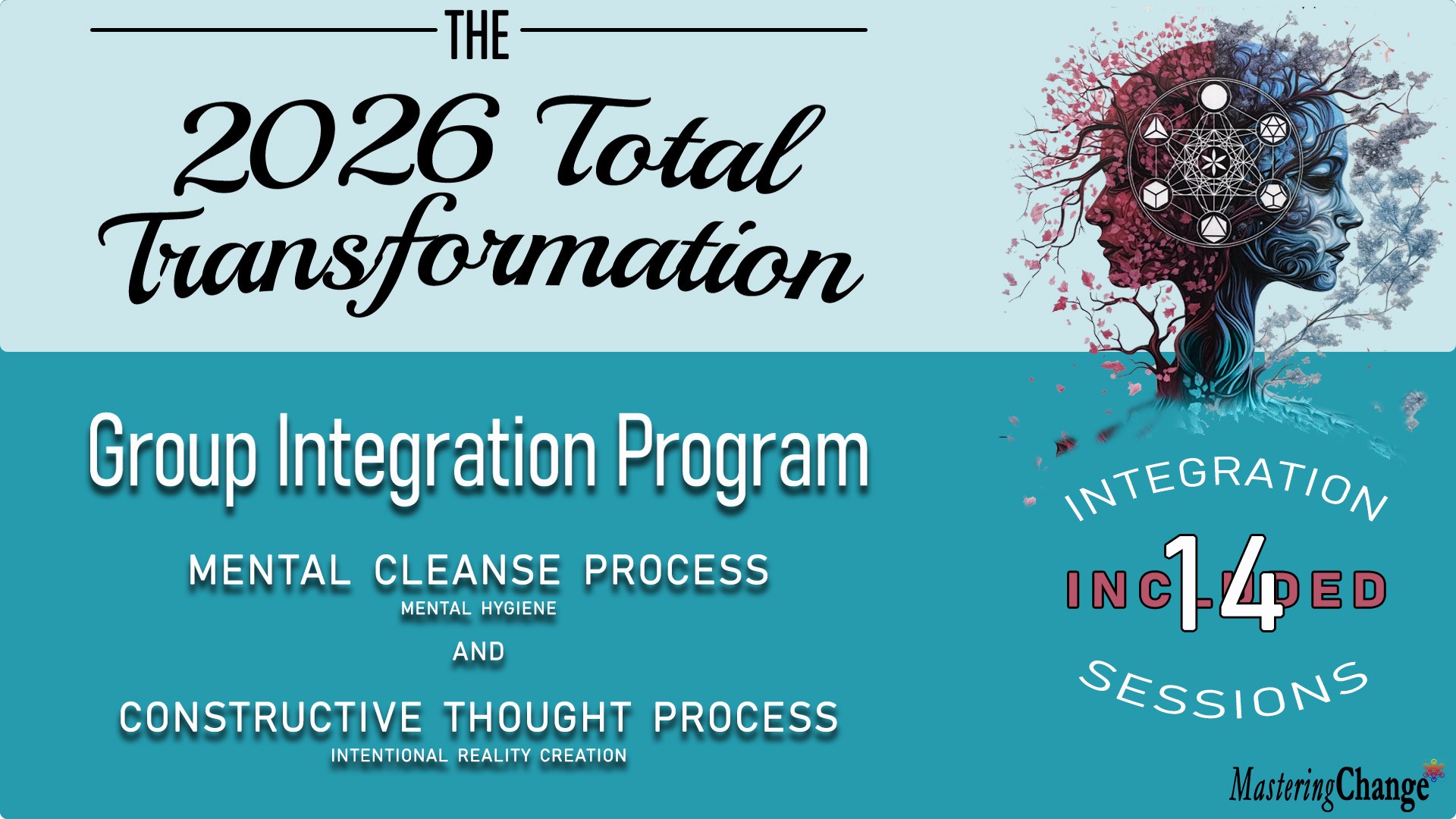
Support Option: Commit to Deeper Recalibration – January 6
For those who feel ready for a deeper level of commitment, we invite you to join us on January 6th for a 14-week immersion designed to systematically train the mind’s contemplative eye (or “I”).
This experience is built to support:
• strategic contemplation
• mental hygiene
• orientation recalibration
• reduction of survival-driven suffering
• increased presence and relational clarity
Over 14 weeks, we work with:
• structured inquiry
• guided recalibration practices
• integration support
• real-time application in daily life
This is not about learning concepts.
It’s about changing how the mind operates.
Click here for more information. 2026 Total TIP
Why This Matters
The mind learned how to survive.
Most of us never learned how to guide it.
Living Inquiry is a process reclaim that authority at depth.
If you’ve felt:
• stuck in repetitive stories
• reactive in ways you don’t choose
• disconnected from presence
• exhausted by constant mental activity
This work is not about fixing you.
It’s about training a function that was never trained.
The Only Real Question
As you stand at the start of a new year, the question isn’t:
“What will I accomplish?”
The real question is:
“From where will I live?”
Choose an inquiry worthy of that question.
And if you want support as you cultivate it —
we’ll be here.
Happy New Year.