2025 Became the Year of Disclosure: The Backlash Against Illusion
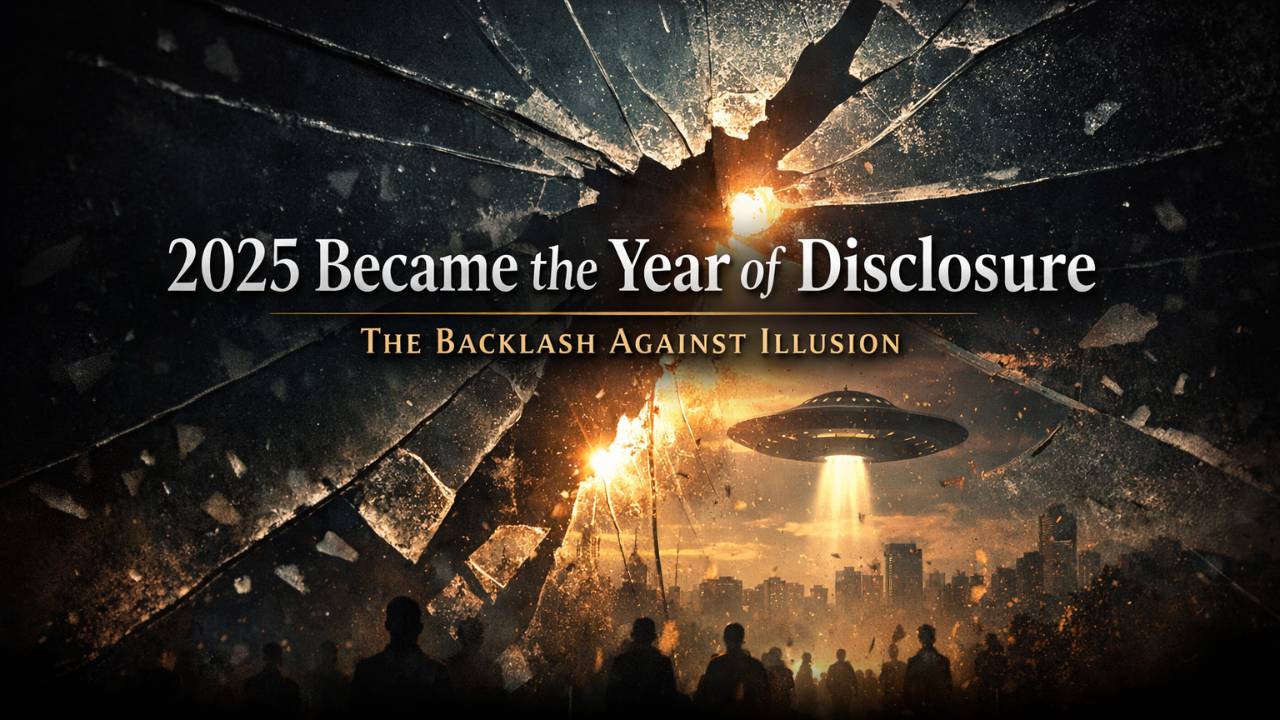
2025 marked a cultural pivot. A collective exhale. A moment when society finally grew tired of holding up façades that no longer served anyone. Celebrities, governments, and the digital world all began cracking open at the same time. Not because transparency suddenly became fashionable, but because illusion finally became too expensive to maintain.
The pattern is unmistakable.
It’s spreading.
And it’s only going to accelerate in 2026.
Celebrities: The Canary in the Coal Mine
Celebrities live and die by illusion. Their careers depend on charisma, beauty, and the image consumers project onto them. That’s why the plastic-surgery disclosure wave of 2025 was so striking. It cut against the bedrock of the celebrity machine.
It started with one spark.
In June 2025, Kylie Jenner openly described the details of her breast augmentation. Not hinted at. Not dodged. She listed implant sizes, placement, and the surgeon. A decade ago, her PR team would have staged a fake “It’s all natural” narrative. Instead, she disclosed.
A screen capture of Kylie Jenner's comment on the TikTok. -Rachel Leary/TikTok
The dominoes fell fast.
Barbara Corcoran joked about sharing her surgical secrets.
John Cena admitted to a hair transplant after fans bullied him for a bald spot.
Theo Von told millions that his famous mullet was man-made.
The truth wasn’t damaging.
It was disarming.
Fans didn’t recoil. They relaxed. They trusted more. Because for the first time, celebrities reflected the public’s own exhaustion with pretending.
Celebrities are always the canary in the coal mine. They sense the cultural wind before anyone else because their survival depends on it. When they drop the illusion, it means the audience no longer wants it.
And that’s what happened in 2025.
Government Disclosure: The Second Crack in the Façade
While celebrities were confessing the artificiality of their physical appearance, another illusion collapsed on a much larger stage: the government’s decades-long silence around UFOs and UAPs.
2025 became one of the most public years of UFO disclosure in modern history.
A wave of events pulled the curtain back:
- The Age of Disclosure, a 2025 documentary, featured 34 former and current U.S. military, intelligence, and government officials openly claiming long-suppressed knowledge of non-human intelligences, alleged recovered craft, and classified research programs.
- Congressional hearings were held under the banner Restoring Public Trust Through UAP Transparency and Whistleblower Protection. Testimony from ex-military personnel was given under oath.
- New legislation was introduced to protect whistleblowers who shared UAP-related information.
- Declassified references and previously hidden radar and video data were discussed openly in hearings.
- Academic legitimacy emerged as universities like Rice hosted UFO conferences that treated the subject as serious scientific inquiry rather than fringe speculation.
For decades, even acknowledging interest in UAPs could end a career.
In 2025, top-level officials talked about it in front of cameras.
But the most important part wasn’t the disclosures themselves.
It was the public reaction.
People weren’t shocked.
They weren’t hysterical.
They were tired.
Tired of being condescended to.
Tired of being told not to look behind the curtain.
Tired of institutions maintaining illusions long after people stopped believing in them.
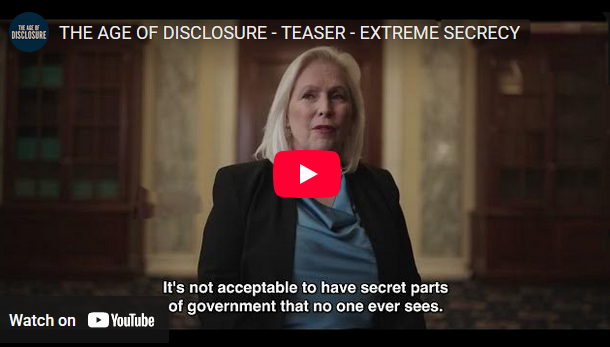
UFO disclosure in 2025 wasn’t just a reveal. It was a rupture.
The same rupture the celebrity world was experiencing.
The same rupture beginning to appear everywhere.
Digital Fatigue: The Collapse of the Artificial
If celebrities are the canary, and the government is the mine, then focused attention is the gold being mined. Your conscious awareness is one of the rarest commodities in the modern world. Your first-person, focused, engaged awareness is the thing everyone is competing for.
And in 2025, the data started reflecting a deeper truth: people began pulling their awareness back. They became more interested in authentic experiences and less interested in investing attention in flat, synthetic imitations of life. Less interested in being fed illusion. The plastic experience no longer held attention the way it once did.
In 2025, that shift became measurable. It stopped being a feeling and started showing up in the numbers.
After years of hyper-edited feeds, hyper-optimized lives, curated identities, dopamine loops, and an internet increasingly filled with AI-generated content, people began stepping away. The digital world didn’t feel alive anymore. It felt engineered.
The fatigue showed up everywhere:
- Users disabling notifications
- People deleting apps after a decade of compulsive scrolling
- Influencers losing engagement unless they showed up raw
- Communities forming around analog living and digital minimalism
- Social posts shifting from perfection to presence
Even the platforms that built entire economies on curated illusions began to lose their grip.
AI didn’t kill authenticity.
It revealed its absence.
As the digital world grew more synthetic, people grew hungrier for something real.
This is where mental hygiene becomes more than a good idea. It becomes a practical necessity. And it is also where mental projection becomes easier to see, because once the world gets saturated with artificiality, the mind’s tendency to place meaning into experience becomes harder to ignore.
Users disabling notifications
Apple’s 2025 Q1 data revealed a 31 percent surge in Focus Mode usage. TechCrunch reported that more than half of Gen Z shut off notifications to protect mental bandwidth. The digital drip-feed stopped working; people reclaimed attention from machines that demanded too much of it.
People deleting apps
Sensor Tower’s 2025 Deletion Index showed record-breaking removals of social apps. Pew found 41 percent of U.S. adults deleted at least one platform in the past year. For the first time, leaving the algorithm wasn’t rebellion. It was self-preservation.
Influencers losing engagement unless they show up raw
Instagram’s 2025 Creator Insights showed a 3x performance jump for raw, unedited posts. TikTok crowned 2025 “the year of unfiltered storytelling.” YouTube Shorts admitted that studio polish underperformed reality. The illusion collapsed because the audience no longer rewarded it.
Communities forming around analog living
The Light Phone had its highest sales quarter in early 2025. The New York Times documented the swell of analog clubs and digital-minimalism retreats. McKinsey’s 2025 report found that 21 percent of Gen Z now keeps a minimalist phone for weekends. People weren’t escaping technology. They were escaping distortion.
Social posts shifting from perfection to presence
Meta’s 2025 transparency update showed that curated posts fell 42 percent while real-time content surged 39 percent. TikTok’s top-performing category was unscripted, present-moment life. Adobe named 2025 “The Raw Human Year.” Audiences moved from spectacle to sincerity.
Your attention is shifting because your psyche is shifting.
2025 became the year the collective nervous system began rejecting illusion. The year people stopped paying attention to plastic and began gravitating toward the real, the unfiltered, and the immediate.
The year the gold began reclaiming itself from the mine.
2026: What Comes Next
2026 won’t reverse this trend. It will intensify it.
The culture is moving toward reality.
Toward ownership.
Toward experience.
Toward transparency that isn’t packaged, but lived.
Celebrities feel it first.
Institutions feel it next.
Individuals feel it in their bones.
The old world rewarded illusion.
The new world rewards authenticity.
2025 exposed the cracks.
2026 will expose the cost of continuing to pretend.
And for many people, that cost will not just be cultural. It will be personal. That is where shadow work and depth work become more relevant, because disclosure is not only something happening in the world around us. It is also what happens when the structures we use to avoid ourselves can no longer hold.
Experiences: The Return to Real Life
As people pulled their attention back from illusion in 2025, something else rose in its place.
Not content.
Not screens.
Experience.
After years of living through devices, the collective psyche began steering itself back into the world. Maybe it was the residue of COVID. Maybe it was the sudden presence of AI in every corner of daily life. Maybe it was the exhaustion of existing inside a flat, Zoom-mediated half-life. Maybe it was all of it at once. Whatever the cause, the shift became impossible to ignore.
And in 2025, it became measurable.
The travel industry reported one of its strongest years in over a decade, with international arrivals climbing and 92 percent of Americans planning at least one trip. Experiential travel, immersive, local, embodied, became the dominant trend of the year.
The global wellness market surged to 6.8 trillion dollars, and the fastest-growing sectors weren’t products or apps. They were retreats, spas, cold-plunge houses, breathwork studios, and embodied workshops. Wellness retreats alone jumped nearly 10 percent from 2024 to 2025, signaling a return to physical presence as a form of healing.
Even community shifted.
Analog clubs, hiking groups, maker circles, and in-person gatherings all saw renewed growth. The Light Phone posted the highest sales quarter in its history, and McKinsey reported that 21 percent of Gen Z now keeps a minimalist phone for weekends, not for nostalgia, but to step back into reality.
People were no longer satisfied with the simulation.
They wanted sensation.
They wanted texture.
They wanted the unmediated world again.
2025 became the year real experience outperformed digital convenience.
The year the body reclaimed what the screen had borrowed.
The year presence became the antidote to illusion.
This is also why Turning Within matters. Because once illusion loses its grip, the question becomes what you do with the awareness that returns.